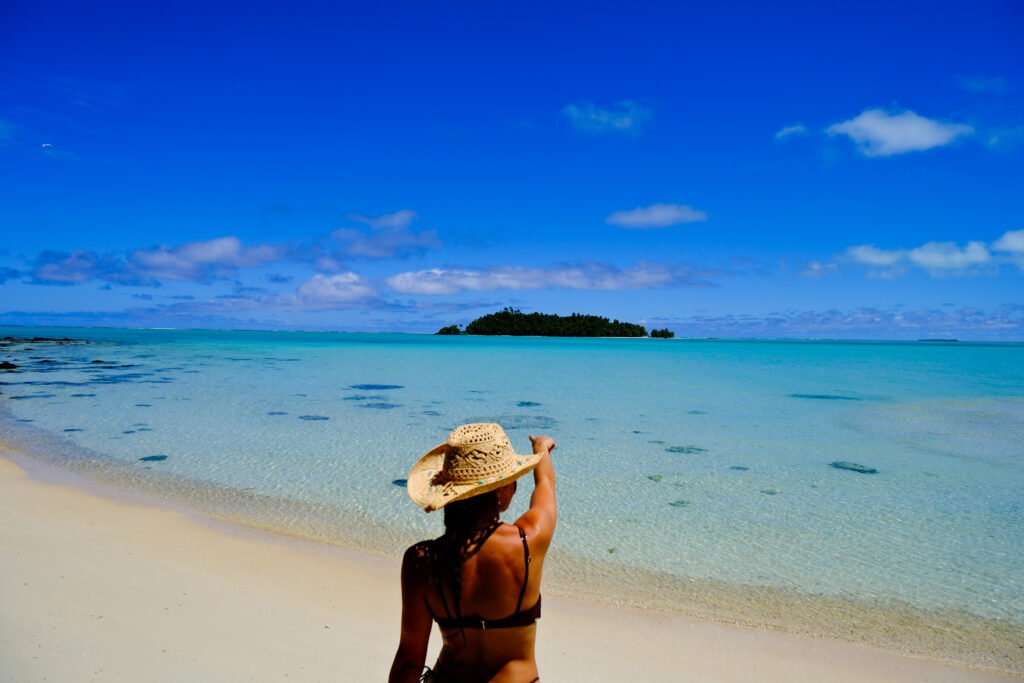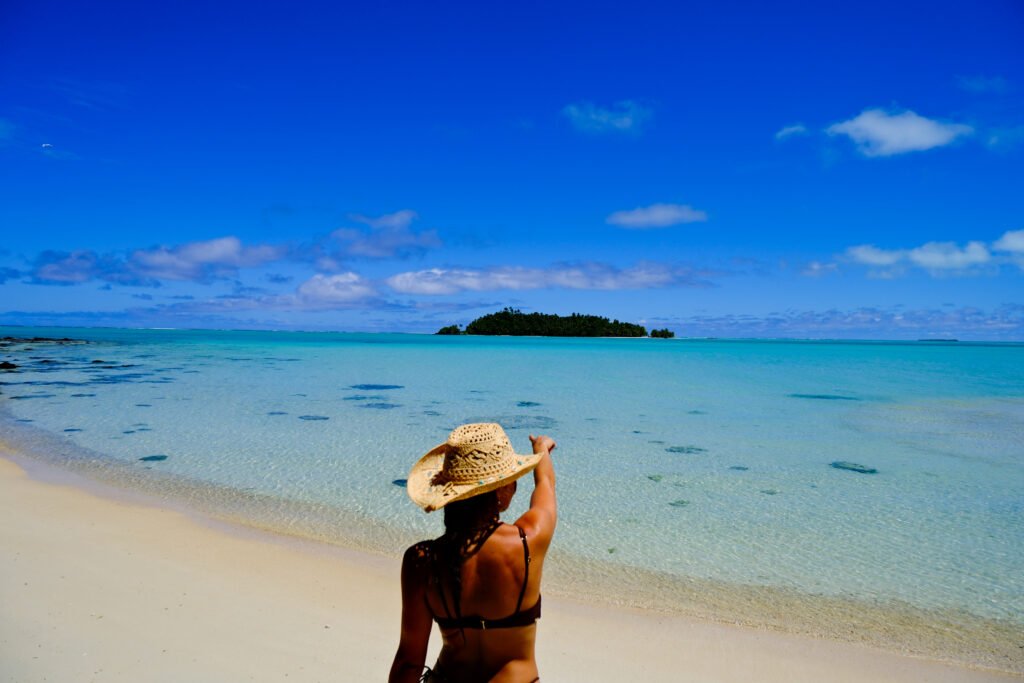
Most people give Aitutaki a single day — fly in from Rarotonga, do the lagoon cruise, fly home before dark. We get why: the lagoon is the postcard shot everyone comes for. But treating Aitutaki as a day trip means missing almost everything else it actually has, and honestly, it deserves at least 3 days, ideally 5. Here’s how we’d spread that time out.
Getting there
Air Rarotonga runs the only flights across, and it’s a short hop — around 45 minutes in the air. Book the lagoon-side window seat if you can; the approach over the reef is worth it on its own. There’s no need to rent a car sight unseen either: most accommodation is a short scooter or bike ride from the airport, and Aitutaki is small enough that you’ll get your bearings within a day.
Day 1: Land, slow down, get your first look at the lagoon
Don’t book anything for the afternoon you land. Check in, walk the beach in front of wherever you’re staying, and let the lagoon do its thing at sunset — the water shifts through about six shades of blue before the light goes. If you’re up for it, hire bikes and do a slow loop toward Arutanga, the main village, just to get oriented. Dinner somewhere simple and local is the right call; you’ll want an early night before the lagoon cruise.
Day 2: The full-day lagoon cruise
This is the day everyone comes for, and it earns the hype. A handful of local operators run full-day vaka (traditional catamaran) cruises out to the motu — the small sand islets scattered across the lagoon. A typical route stops at Tapuaetai, better known as One Foot Island, where you can get your passport stamped at possibly the smallest post office in the world, then on to a giant clam sanctuary for snorkelling, and often a third motu for lunch cooked right there on the sand. Book directly with the operator rather than through a middleman, and confirm what’s included — snorkel gear, lunch, and drinks vary between companies.
Go easy the rest of the day. A full day in the sun and water is more tiring than it looks.
Day 3: The island itself, not just the water
This is the day most one-day visitors never get, and it’s where Aitutaki stops being just a lagoon and starts being a place. Cycle or drive the loop road around the main island — it’s small enough to cover properly in half a day. Stop at one of the churches in Arutanga (the white Cook Islands Christian Church is the one most people photograph), and if you’re there on a Saturday, the local market is worth timing your visit around: fresh produce, baked goods, and a much better sense of daily island life than any resort gives you.
If you want a view over the whole lagoon from land, the short climb up Maunga Pu on the northern end of the island gives you that — it’s steep in patches but doesn’t take long, and the payoff is a proper look at just how big and how many shades of blue the lagoon really is.
Day 4: Back on the water, differently
With the big lagoon cruise already done, day 4 is for whatever you didn’t get to. Aitutaki’s flat, shallow lagoon is genuinely good for kitesurfing and paddleboarding if that’s your thing, and a few operators offer lessons for beginners. If you’d rather stay slow, a half-day or private snorkel charter to a quieter motu than the main cruise route hits is worth asking your accommodation about — fewer people, same water.
Day 5 (if you have it): Rest, or one more thing
By day 5 you’ve done the big-ticket items, so use this one as a buffer. It’s the day to finally just sit at the resort, take the scenic flight back over the lagoon with fresh eyes, or squeeze in whatever got rained out earlier in the trip. We’d rather build in one unstructured day than try to cram a sixth activity in.
A few practical notes
- Best time to visit: the dry season, roughly May to October, gives you the most reliable weather and calmer lagoon conditions for snorkelling.
- Where to stay: options range from simple beachfront guesthouses to resorts right on the lagoon — book the lagoon-facing room if the budget allows, since you’ll spend a lot of time looking at it.
- Getting around: a bike or scooter covers everything you need; the island’s one main road makes it hard to get lost.
- Money: card acceptance is patchy outside the resorts, so carry some cash for the market and smaller operators.
- Sun protection: reef-safe sunscreen, a hat, and more water than you think you need — there’s very little shade out on the motu.
One day in Aitutaki gets you the photo. Three to five days gets you the place — the market, the climb, the quieter motu, the slow mornings. If your itinerary only has room for a day trip from Rarotonga, take it. But if you can shift things around to stay longer, this is the island that rewards it most.